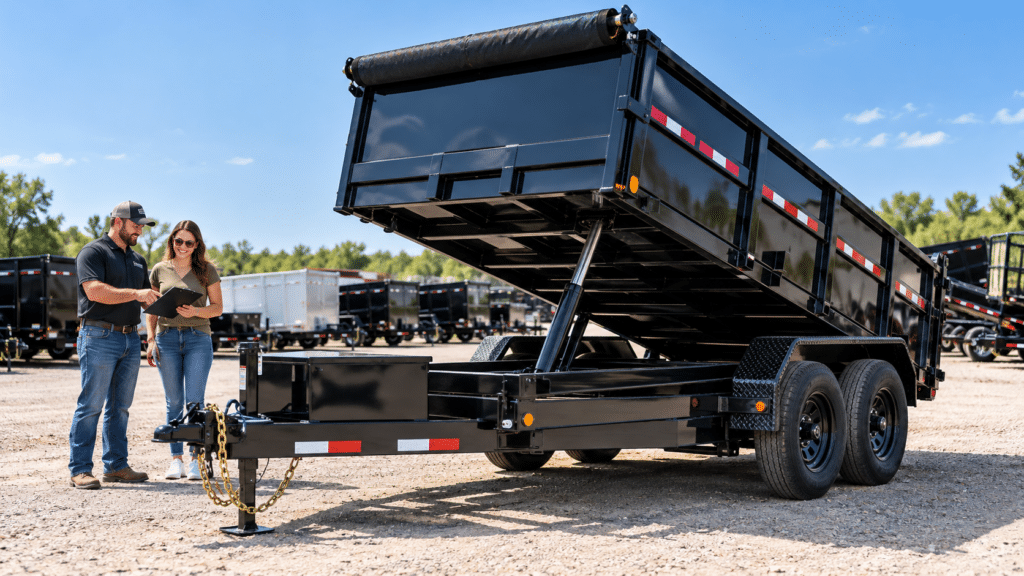
Rent-to-own dump trailers can give contractors, haulers, landscapers, and owner-operators a practical way to access a trailer without paying the full purchase price upfront. Instead of waiting until cash is available, buyers can explore payment options that may help them put equipment to work sooner. This guide explains how dump trailers rent to own programs typically work, what to compare, and how to think about financing when searching for rent to own dump trailers near me.
What should you know before choosing a rent-to-own dump trailer?
A rent-to-own dump trailer arrangement usually lets you make scheduled payments while using the trailer, with the goal of ownership after the agreement is completed. The biggest thing to understand is that each provider may structure terms differently, so the payment amount, ownership timeline, fees, maintenance responsibilities, and early payoff options all matter. Before signing anything, review the total cost, not just the weekly or monthly payment.
Dump trailers are work assets, so the right choice depends on what you plan to haul, how often you will use it, and whether the trailer can support your income-producing work. A landscaper hauling mulch has different needs than a contractor moving demolition debris or a small fleet hauling aggregate. The best option is not always the cheapest payment; it is the trailer and financing structure that fit the job without straining cash flow.
Why rent-to-own appeals to trailer buyers
Rent-to-own can be attractive because it spreads the cost over time while giving the buyer access to the trailer during the payment period. For many small businesses, that access matters. A dump trailer can help take on more jobs, reduce dependence on rentals, or make daily hauling more efficient.
It can also be helpful for buyers who do not want to pursue a traditional bank loan or who need flexible documentation options. Searches for no credit check trailer financing, utility trailer financing no credit check, and no credit check trailer financing near me are common because many buyers want a path forward even when their credit history is limited, imperfect, or difficult to document.
That said, “no credit check” does not mean “no review.” Providers may still evaluate income, business activity, down payment, banking history, equipment type, or other factors. A responsible financing partner should explain the process clearly and help you understand what is required before you commit.
Key factors to compare before you commit
A trailer payment can look affordable at first glance, but the details determine whether the agreement is a good fit. When comparing rent-to-own providers or trailer financing options, slow down and review the full picture.
Use this checklist before choosing a program:
- Total cost of ownership: Add up payments, fees, taxes, insurance requirements, and any final purchase amount.
- Payment frequency: Weekly, biweekly, and monthly payments can affect cash flow differently.
- Trailer condition: Inspect tires, brakes, hydraulics, flooring, gate function, frame condition, and lights.
- Payload and size: Make sure the trailer is rated for the materials you actually haul.
- Maintenance responsibility: Clarify whether repairs are your responsibility during the rent-to-own term.
- Early payoff terms: Ask whether paying early reduces total cost or triggers a fee.
- Default and return rules: Understand what happens if you miss payments or need to exit the agreement.
- Insurance requirements: Confirm coverage needs before taking possession.
These points help you compare offers beyond the headline payment. A slightly higher payment may be worth it if the trailer is newer, better suited to your work, or backed by clearer terms. On the other hand, a low payment can become expensive if the agreement includes unexpected fees or if the trailer cannot handle your jobs.
Understanding no credit check trailer financing
No credit check trailer financing is often discussed by buyers who want an alternative to conventional credit-based approvals. It may be structured around business revenue, down payment, equipment value, or other underwriting methods rather than relying only on a traditional credit pull. This can be helpful for new businesses, independent operators, or buyers rebuilding credit.
However, buyers should be realistic. A financing provider still needs confidence that payments can be made. You may need to show proof of income, business bank statements, identification, invoices, or other documentation. If a provider claims approval is guaranteed with no meaningful review, that is a reason to ask more questions.
For buyers comparing trailer options, a dedicated financing resource can be a useful starting point. Hora Funding provides information on trailer financing for buyers exploring ways to acquire trailers for business or hauling needs.
How to search for local rent-to-own options
Searching for rent to own dump trailers near me can help you find nearby dealers, trailer lots, and financing providers, but local availability can vary. Inventory changes, and not every seller offers the same payment structure. When you contact a provider, be specific about the trailer size, axle setup, gate style, and intended use.
A simple local search is only the beginning. You should also ask whether the provider works with buyers outside your immediate area, whether delivery is available, and whether financing can be arranged before you visit the lot. If you are using the trailer for business, also ask what documents are needed so you do not lose time going back and forth.
Here are a few practical questions to ask when contacting a seller or financing partner:
- What dump trailer sizes and weight ratings are currently available?
- Is the agreement a rental, lease, financing contract, or true rent-to-own program?
- What upfront payment is required before taking the trailer?
- Are there mileage, use, or location restrictions?
- Who handles repairs if the hydraulic system, brakes, or lights fail?
- Can the agreement be paid off early?
- What documents are required for approval?
Asking these questions early can prevent confusion later. It also signals that you are serious and ready to compare options professionally.
Matching the trailer to the work
The right dump trailer should match your daily workload, not just your budget. If you regularly haul heavy material, payload capacity and braking performance are critical. If you work in tight residential areas, maneuverability and trailer length may matter more. For landscaping, side height and gate configuration can make loading and unloading easier.
Think about the jobs you do most often. A smaller dump trailer may be easier to tow and park, but it might require more trips. A larger trailer may improve efficiency, but it could require a stronger tow vehicle and higher operating costs. If you already own a truck, confirm that it can safely tow the trailer when loaded, not just when empty.
Businesses that need both hauling equipment and vehicle support may want to look at related funding options too. For example, buyers considering tow vehicle upgrades can review truck financing, while companies adding machines, tools, or other assets can explore equipment financing.
When rent-to-own makes sense
Rent-to-own can make sense when the trailer will support consistent work and the payment fits comfortably into expected cash flow. It may be especially useful when renting repeatedly has become inconvenient or when owning a trailer would help you accept more jobs. The key is to connect the payment to a realistic business purpose.
For example, an operator who hauls debris several times a week may benefit from having a dump trailer ready at all times. A seasonal business may prefer a structure that keeps upfront costs lower while preserving cash for labor, fuel, and materials. A newer business may use rent-to-own as a bridge while building financial history.
It may not make sense if the trailer will sit unused, if the payment depends on uncertain future income, or if the total cost is much higher than other available options. A good rule of thumb is to consider whether the trailer helps produce revenue, save rental costs, or reduce downtime often enough to justify the commitment.
Rent-to-own compared with other financing paths
Rent-to-own is only one way to acquire a dump trailer. Depending on your business, credit profile, cash position, and growth plans, another option may fit better. The goal is not to choose the trendiest financing term; it is to choose the structure that supports stable operations.
| Option | Potential fit | What to watch |
|---|---|---|
| Rent-to-own | Buyers who want use now and ownership later | Total cost, maintenance rules, payoff terms |
| Traditional financing | Buyers with stronger credit or established business history | Down payment, credit review, loan requirements |
| Cash purchase | Buyers with available capital | Reduced cash reserves after purchase |
| Short-term rental | Occasional or temporary hauling needs | No ownership and repeated rental costs |
| Fleet financing | Companies adding multiple trailers or vehicles | Larger commitment and planning needs |
Owner-operators and growing companies may also need broader funding strategies. Independent drivers can explore owner-operator financing, while businesses adding multiple vehicles or trailers may benefit from reviewing commercial fleet financing.
What documents might help the process move faster?
Even if you are searching for utility trailer financing no credit check or no credit check trailer financing near me, being prepared can make the process smoother. Financing providers often need enough information to understand who is applying, how the trailer will be used, and whether the payment is manageable. Having documents ready can reduce delays and help you compare offers more clearly.
Consider gathering:
- Government-issued identification
- Business formation documents, if applicable
- Recent bank statements
- Proof of income or business revenue
- Trailer invoice, quote, or dealer information
- Insurance details or agent contact information
- Information about your tow vehicle
- Trade-in details, if you plan to use one
Not every provider will ask for the same documents. Still, preparation gives you more control. It also helps you avoid choosing a poor agreement simply because it was the fastest option available.
Red flags to avoid
A trailer is a practical investment, and the agreement should be practical too. Be cautious if the seller will not explain the total cost, avoids written terms, pressures you to sign immediately, or dismisses your questions about ownership. Transparency matters, especially when the trailer will be used for work.
Also be careful with agreements that focus only on the payment amount. A low payment can hide a long term, high fees, or unclear ownership conditions. Before you sign, make sure you know exactly when the trailer becomes yours, what happens if you pay early, and what obligations you have during the agreement.
The takeaway for buyers
Exploring rent-to-own dump trailer options can be a smart move when you need hauling capacity and want to preserve cash. The best approach is to compare the trailer, the payment structure, the total cost, and the provider’s transparency before making a decision. Whether you are searching for dump trailers rent to own or evaluating broader financing options, focus on a solution that supports the work you actually do.
A dump trailer should help your business move more efficiently, not create financial strain. Review your options carefully, ask direct questions, and choose a path that fits your equipment needs, cash flow, and long-term plans.